Home › Blog › Yoga Teacher Training
Yoga Teacher Training
Why Sri Lanka Is Becoming a Top Yoga Teacher Training Destination
Twelve reasons more yoga students are choosing Sri Lanka for their teacher training, how it compares with India, Bali and Thailand, and what to know before you go.
For years, aspiring yoga teachers headed almost automatically to India, Bali or Thailand. Today, a growing number are choosing Sri Lanka instead. Yoga schools on the island report students from Europe, North America, Australia and Asia, many of whom had never considered Sri Lanka until a friend came back glowing about their course.
What is behind the change? In this article we look at the twelve main reasons Sri Lanka is becoming one of the most popular destinations for yoga teacher training, how it compares with other yoga hotspots and the practical things to know before you book.
Key takeaways
- Sri Lanka offers peace and space that busier yoga hubs have lost.
- Recognised 100, 200 and 300 hour courses are available on the island.
- Warm weather, healthy food and a strong meditative culture support training.
- Costs are much lower than in Western countries.
- The island is small, so it is easy to explore after your course.
1. A peaceful environment for learning
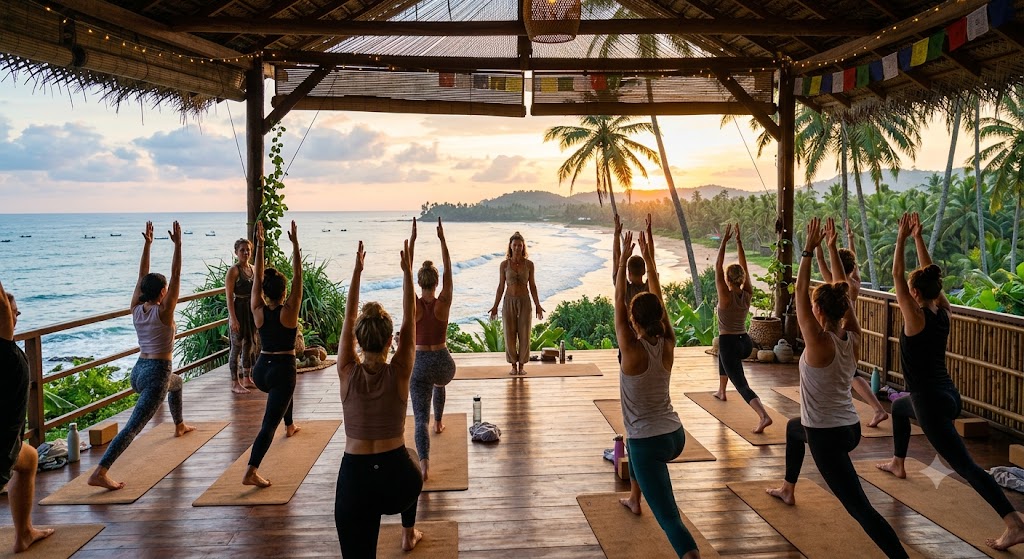
As other yoga destinations have become busier, students increasingly look for somewhere quieter. Many Sri Lankan yoga schools are set among gardens, near quiet beaches or close to small villages, far from traffic and nightlife. Early mornings are filled with birdsong and the sound of the sea rather than motorbikes.
This matters more than it sounds. A teacher training asks a lot of your energy and attention. In a calm place, less of that energy is spent filtering out noise, and more goes into practice and learning.
2. Beaches that make practice feel effortless
Sri Lanka’s south coast is lined with sandy bays and palm trees. Practising near the ocean, with fresh air and the rhythmic sound of waves, makes breathwork and meditation feel more natural, and a swim after class is the best way to recover from a long day. Read more in the benefits of practising yoga near the ocean in Sri Lanka.
3. Internationally recognised courses
A few years ago the choice of certified courses on the island was limited. Today, Yoga Alliance registered schools offer the full range of trainings:
Graduates of a registered 200 hour course can register with Yoga Alliance and teach internationally.
4. Warm weather for most of the year
Sri Lanka has a tropical climate, so it is warm throughout the year, which keeps muscles supple and makes outdoor practice a pleasure. The island has two monsoon seasons affecting different coasts at different times. In general, the south and west are best from December to April and the east from May to September. See the best time to visit Sri Lanka for yoga teacher training for details.
5. Excellent value compared with the West
Course fees, accommodation, food and local transport in Sri Lanka cost considerably less than in Europe, Australia or North America. For many students, the price of a non-residential course at home is similar to the cost of a full residential month in Sri Lanka, including the flight. That makes quality training accessible to more people.
Train in Sri Lanka with Ekant Yoga200 Hour TTC · 23 days · Yoga Alliance certified
Enquire now →
6. A complete wellness lifestyle
A residential course in Sri Lanka is a reset for body and mind. Days follow a healthy rhythm: early rising, morning practice, nourishing meals, study, evening practice and early nights. Phones are used less, sleep improves and many students feel healthier after a month than they have in years. The island’s Ayurvedic tradition adds massage, herbal remedies and practical advice on food and daily routine. Discover more in top wellness experiences in Sri Lanka.
7. A rich spiritual heritage
Buddhism has shaped Sri Lankan culture for more than two thousand years. Temples, stupas and monasteries are found across the island, and meditation is part of everyday life for many people. For yoga students, being surrounded by a living contemplative tradition gives depth to the philosophy and meditation studied in class.
8. Smaller class sizes
Many Sri Lankan schools are smaller and more personal than the large training centres found in some destinations. In a smaller group, teachers can watch your alignment, give feedback on your teaching and get to know you as a person. That individual attention is one of the main reasons graduates feel confident to teach.
9. A diverse international community
Training groups bring together people of all ages and backgrounds from around the world. Sharing a month of early mornings, hard work and breakthroughs creates close friendships, and many graduates stay in touch, visit each other and even teach together afterwards.
10. Fresh, healthy food
Sri Lankan cuisine is naturally suited to a yogic diet. Rice and curry comes with several vegetable dishes, dhal and coconut sambol. Tropical fruit, fresh king coconut water and herbal teas are everywhere. It is easy to eat well, and vegetarians are spoiled for choice.
11. A small island that is easy to explore
Sri Lanka is compact. In a week or two after your course you can visit tea country, ride the famous train to Ella, see elephants on safari, explore ancient cities and relax on more beaches. Many students build their trip around the training. For ideas, read things to do after yoga teacher training in Sri Lanka.
12. Authentic and not yet overcrowded
Perhaps the biggest reason is simply that Sri Lanka still feels authentic. Its yoga scene is growing but has not become commercialised, and outside a few towns you are more likely to meet local families than tour groups. Students who want a genuine, grounded experience find it here.
How Sri Lanka compares with other destinations
Each destination has its place, and we run courses in both Sri Lanka and Goa. For a detailed comparison, read Sri Lanka vs India for yoga teacher training.
What to know before you go
- Entry: most visitors need an electronic travel authorisation or visa. Check the current official requirements well before you fly.
- Getting there: international flights arrive at Bandaranaike International Airport near Colombo, a few hours’ drive from the south coast.
- Money: the currency is the Sri Lankan rupee. Cards work in larger towns, but carry some cash.
- Culture: dress modestly away from the beach and cover shoulders and knees at temples.
- Health: drink bottled or filtered water, use mosquito repellent and bring travel insurance.
What to pack
- Light yoga clothes and a modest outfit for temples
- Reusable water bottle
- Sunscreen, hat and insect repellent
- Swimwear and a light towel
- Notebook and pens for lectures
- Any personal medication
Our Sri Lanka travel guide for yoga students covers transport, money and safety in more detail.
Who is choosing Sri Lanka?
The students arriving in Sri Lanka for teacher training come from all walks of life. Some of the most common are:
Career changers
People who want a new direction and see yoga as a meaningful path.
Dedicated practitioners
Students who have practised for years and want to understand yoga deeply.
Health professionals
Fitness trainers, physiotherapists and therapists adding yoga to their skills.
Gap-year travellers
Young people combining study with travel in a meaningful way.
People seeking a reset
Those recovering from burnout or a big life change who want structure and calm.
Repeat visitors
Graduates who return for advanced training after a first course on the island.
A week on a Sri Lanka course
To give you a feel for the experience, here is how a typical week unfolds on a residential 200 hour training:
Monday to Saturday
Learn and practise
Morning pranayama and meditation, two asana practices a day, and lectures on anatomy, philosophy and teaching methodology.
Afternoons
Rest and study
A long lunch break for swimming, reading, napping or reviewing notes in the shade.
Evenings
Wind down
Dinner with the group, sunset walks on the beach and early nights.
Day off
Explore
Visit a temple, a nearby beach town or a tea estate, or simply rest.
By the end of week one, most students say the routine feels natural. By week three, they often wish it would not end.
Teaching after your course
A recognised certificate from Sri Lanka is respected around the world, just like one from India or anywhere else. Graduates teach in their home countries, at studios and gyms, online, at retreats and in workplaces. Some stay in Asia and teach in resorts and wellness centres. What matters most to employers is not where you trained but how well you teach, which is why a course with plenty of practice teaching and feedback is so valuable.
The calm, focused setting in Sri Lanka helps here too. With fewer distractions, students absorb more, practise teaching more and leave more confident than they expected.
Why choose Ekant Yoga in Sri Lanka?
Ekant Yoga offers Yoga Alliance certified courses in a peaceful setting, with experienced teachers, small groups, daily meditation and a supportive, international community. Hatha and Vinyasa form the core of the training, with Yin or Ashtanga depending on the teachers available for each batch. Choose the 23-day 200 hour course, the 11-day 100 hour course or the 28-day 300 hour advanced course. To compare schools, read our complete guide to the best yoga teacher training in Sri Lanka.
Final thoughts
Sri Lanka’s rise as a yoga teacher training destination is no accident. Peace, nature, recognised courses, healthy food, a living spiritual tradition and excellent value make it an ideal place to learn. If you want a training that feels authentic and personal, it deserves a place at the top of your list.
Contact us to enquire for upcoming dates.
Frequently asked questions
Why is Sri Lanka popular for yoga teacher training?
It combines peaceful settings, beautiful beaches, warm weather, recognised courses, healthy food and good value.
Is it suitable for beginners?
Yes. Most 200 hour courses welcome beginners with a regular practice as well as experienced students.
What will I learn?
Asana, pranayama, meditation, philosophy, anatomy, alignment and teaching methodology, with plenty of practice teaching.
How long do courses last?
At Ekant Yoga, the 100 hour course takes 11 days, the 200 hour course 23 days and the 300 hour course 28 days.
When should I go?
For the south coast, December to April is usually best.
Can I teach after the course?
Yes. After a Yoga Alliance registered 200 hour course you can register as an RYT 200 and start teaching.
Is Sri Lanka safe for solo travellers?
Most visitors find it friendly and welcoming. Take the usual travel precautions and check current travel advice before you go.