Home › Blog › Yoga Teacher Training Guides
Yoga Teacher Training Guides
Best Places for Yoga Teacher Training in Sri Lanka
Unawatuna, Galle, Ahangama, Weligama, Mirissa and Koggala compared, plus what makes a great training destination, what you will learn and how to choose the right school.

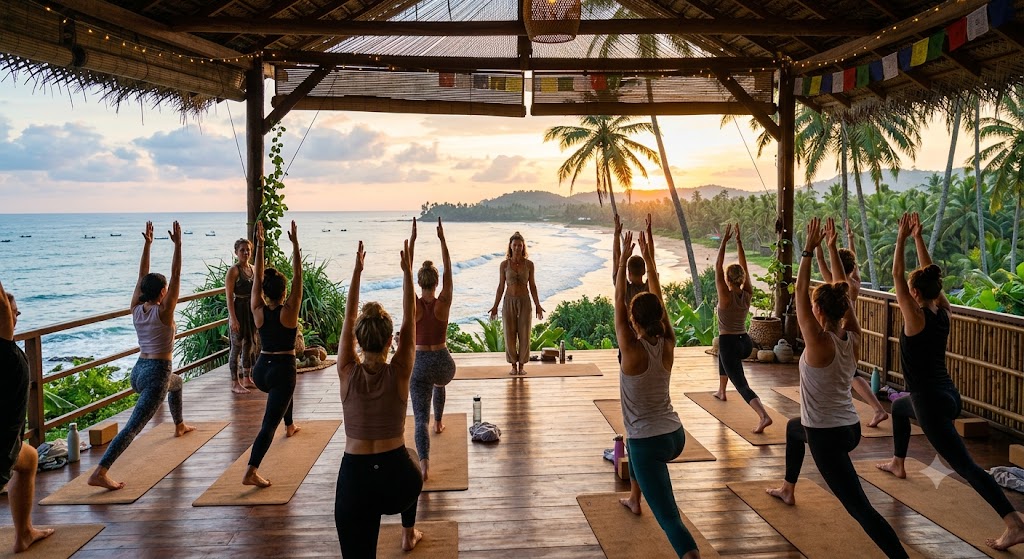
Where you train shapes how you train. A calm, beautiful setting makes it easier to wake early, focus on long days of study and let the deeper lessons of yoga sink in. That is why so many students now choose Sri Lanka for their yoga teacher training.
India will always be the birthplace of yoga, but Sri Lanka has become one of the most popular places in Asia for internationally recognised training. This guide explains why, compares the best towns on the island for your course, outlines what you will learn and shows you how to choose the right school, including our own 200 hour yoga teacher training in Sri Lanka.
Key takeaways
- The south coast, from Unawatuna and Galle to Mirissa, is the heart of yoga training in Sri Lanka.
- Choose by atmosphere: culture in Galle, surf in Ahangama and Weligama, quiet in Mirissa and Koggala.
- A good school matters more than the town: check certification, teachers, class size and what is included.
- November to April is the most popular time to train on the south coast.
Why Sri Lanka is an excellent destination for yoga teacher training
Sri Lanka offers almost everything a student needs for an intensive course:
Tropical weather
Warm days make early morning practice, often outdoors, comfortable for most of the year.
Natural beauty
Beaches, coconut groves, lagoons and green hills keep you inspired between classes.
Healthy food
Fresh vegetables, fruit, rice, lentils and coconut make vegetarian and vegan eating easy.
Good value
Training, accommodation and living costs are lower than in Europe, North America or Australia.
Friendly people
Warm hospitality and a gentle pace of life make students feel at home.
Easy to reach
Good flight connections from Europe, the Middle East, Asia and Australia.
Add a peaceful atmosphere and an international yoga community, and it is easy to see why the island has become so popular. To compare it with India, read Sri Lanka vs India for yoga teacher training.
What makes a great yoga teacher training destination?
Peace and natural surroundings
Teacher training is intense. A quiet setting with nature nearby helps you stay focused, rest well and process what you are learning. Noise, traffic and nightlife make that much harder.
Qualified, experienced teachers
Great teachers teach far more than postures. They guide you through philosophy, anatomy, pranayama, meditation and teaching methodology, and they give you personal feedback.
Comfortable accommodation and good food
Over three or four weeks, a clean, calm room and nourishing meals make a real difference to your energy and concentration.
A supportive community
Training brings together people from many countries who share the same values. A warm, encouraging group helps you through the challenging days and often becomes a lifelong network of friends.
The best places for yoga teacher training in Sri Lanka
1. Unawatuna: a beach paradise for yoga students
This popular south-coast town balances relaxation, culture and wellness. Its curved bay has calm, warm water for swimming after class, and you will find wellness cafés, beautiful sunsets and a relaxed, safe feel that suits solo travellers. Galle Fort and the Japanese Peace Pagoda are close by for weekend trips.
2. Galle: history and mindful living
Just a short drive from Unawatuna, Galle is famous for its UNESCO-listed fort and colonial streets. Students love the small galleries, quiet cafés, Ayurveda centres and meditation spaces, and evening walks along the old ramparts as the sun sets over the ocean.
Galle is a good choice if you enjoy history and want a little more to explore on your days off, while still being close to the beach.
3. Ahangama: yoga meets surf culture
Ahangama has become a favourite with yogis, surfers and digital nomads, yet it keeps a relaxed, village feel. Many students take surf lessons on their day off; surfing builds balance and breath control that complement your practice beautifully.
The town also has many healthy cafés, juice bars and co-working spaces, so it suits students who want a lively but laid-back atmosphere outside class hours.
4. Weligama: relaxed coastal living
A wide bay with gentle waves, healthy restaurants and a welcoming community of travellers. Weligama is ideal if you want an easy-going base with everything you need close by.
5. Mirissa: for nature lovers
Mirissa’s striking coastline and calmer atmosphere suit meditation and pranayama. Early-morning beach walks and spectacular sunsets make it a beautiful place to study. From December to April, you can also join whale-watching trips.
6. Koggala: a hidden wellness escape
Quieter than its neighbours, Koggala sits between uncrowded beaches and a peaceful lake dotted with small islands. It is perfect for students who want silence, greenery and few distractions.
A day in the life during training
Wherever you choose on the south coast, your training days will follow a similar rhythm. Here is what a typical day can look like.
Early morning
Meditation, pranayama and asana
The day begins in the cool of the morning, often to the sound of birds and waves, with breathwork, meditation and a strong asana class.
Late morning
Breakfast and study
A fresh tropical breakfast, then philosophy or anatomy lectures in the shala.
Afternoon
Rest and teaching practice
A long lunch break to rest or swim, followed by teaching methodology and practice teaching in small groups.
Evening
Gentle practice and sunset
A softer class or meditation, dinner together and time to review notes before an early night.
Most courses have one day off a week. That is your chance to explore: a surf lesson in Weligama, a walk around Galle Fort, a boat trip on Koggala Lake or simply a lazy day on the beach.
Getting to the south coast
Most students fly into Bandaranaike International Airport near Colombo. From there, the Southern Expressway makes the drive to Galle and the south coast surprisingly quick, usually around two and a half to three and a half hours depending on traffic and your exact destination. Many schools can arrange an airport pick-up for you. There is also a coastal train from Colombo to Galle and Matara, a slower but beautiful journey along the sea.
If you arrive late at night, consider staying near the airport or in Negombo and travelling south the next morning, so you start your course rested.
Why southern Sri Lanka is the best region for training
Most internationally recognised yoga schools are on the south coast, and for good reason. The tropical climate is warm and pleasant in the main training season, beaches and quiet nature are always close, and fresh local food supports a healthy lifestyle. There is also a strong wellness community of cafés, Ayurveda centres and fellow practitioners, which makes students feel supported and at home.
The south is also easy to reach: Colombo’s international airport is a few hours away by car or expressway, and the coast is well connected to Ella, Kandy and the rest of the island for travel after your course. See things to do after yoga teacher training in Sri Lanka.
What you will learn during yoga teacher training
Asana
Alignment, body awareness, sequencing and safe hands-on adjustments.
Pranayama
Breathing techniques for focus, energy and emotional balance.
Meditation
Practices for concentration, mindfulness and inner peace.
Philosophy
Ethical living, the yogic lifestyle and classical texts such as the Yoga Sutras.
Functional anatomy
How the body moves and how to teach safely for different bodies.
Teaching methodology
Demonstrating, sequencing, observing, communicating and supervised practice teaching.
For a full overview, read What Is a 200 Hour Yoga Teacher Training? and What to Expect During a 200 Hour Course.
How to choose the right yoga school
The town matters, but the school matters far more. Look for:
- A recognised certification, such as Yoga Alliance
- Experienced teachers with a strong background in their subjects
- Small class sizes, so you get personal attention
- A complete syllabus covering asana, pranayama, meditation, philosophy, anatomy and teaching
- Comfortable accommodation and healthy, freshly cooked meals
- Positive, detailed and recent reviews
- A warm, supportive learning environment
Red flags to watch out for
- Very large groups where teachers cannot give individual attention
- Vague information about teachers or the syllabus
- No clear details about the certificate
- Prices that seem too good to be true, with many hidden extras
- Only a handful of reviews, or reviews that all sound the same
Why students choose Ekant Yoga in Sri Lanka
Ekant Yoga’s Sri Lanka programmes are Yoga Alliance certified and taught by experienced teachers in small groups. Students enjoy a peaceful, nature-filled setting, comfortable private or shared rooms, nourishing vegetarian meals, daily practice and an international community. We offer 100 hour, 200 hour and 300 hour courses, so you can start at the right level and keep growing.
“Ekant Yoga teachers are very experienced. It felt like a private tuition even though I was with 4 others.”
Jessica, Ekant Yoga student
Best time to join yoga teacher training in Sri Lanka
November to April is the most popular period on the south coast, with warm, sunny days and lower rainfall. Many schools run all year, though, and the quieter months from May to October can bring fewer crowds and a calm, green landscape. Read the best time to visit Sri Lanka for yoga teacher training for a month-by-month guide.
Tips before you book
- Read the school’s philosophy and make sure its approach feels right for you.
- Check recent testimonials on more than one platform.
- Compare what is included: accommodation, meals, manuals, excursions and transfers.
- Look at the daily schedule to understand the workload and free time.
- Confirm the certificate you will receive and its registration status.
- Choose a peaceful location that will help you focus.
- Plan extra days before and after the course to arrive rested and explore afterwards.
Practical questions about visas, money and transport are answered in our Sri Lanka travel guide for yoga students.
Final thoughts
Sri Lanka’s south coast offers the ideal mix for an immersive yoga teacher training: beautiful landscapes, warm culture, healthy food and a supportive wellness community. Choose the town whose atmosphere suits you, then choose a school with authentic teaching, personal attention and real support.
If you would like to train with us, explore our Sri Lanka courses or contact us with your questions.
Frequently asked questions
Is Sri Lanka a good place for yoga teacher training?
Yes. It offers a peaceful setting, experienced teachers, good value, beautiful scenery and internationally recognised schools.
Which part of Sri Lanka is best for yoga teacher training?
The south coast: Galle, Unawatuna, Ahangama, Weligama, Mirissa and Koggala, for their relaxed atmosphere and wellness culture.
Can beginners join yoga teacher training?
Yes. Most 200 hour courses welcome beginners who are committed to a regular practice.
How long does a yoga teacher training course last?
At Ekant Yoga, the 100 hour course takes 11 days, the 200 hour course 23 days and the 300 hour course 28 days.
Is the certificate recognised internationally?
Ekant Yoga courses are Yoga Alliance certified, which is recognised by studios around the world. Registration with Yoga Alliance is a separate step after the course.
Can I surf during my training?
On your day off, yes. Ahangama and Weligama are great places for beginner surf lessons.
Why choose Ekant Yoga?
Authentic teaching, experienced teachers, small groups, comfortable accommodation, nourishing meals and a peaceful setting.