Home › Blog › Yoga Teacher Training
Yoga Teacher Training
How to Choose the Best Yoga Teacher Training in Goa
A practical checklist for choosing a yoga teacher training in Goa: certification, curriculum, teachers, location, reviews, course length, what is included, red flags to avoid and the questions to ask before you book.
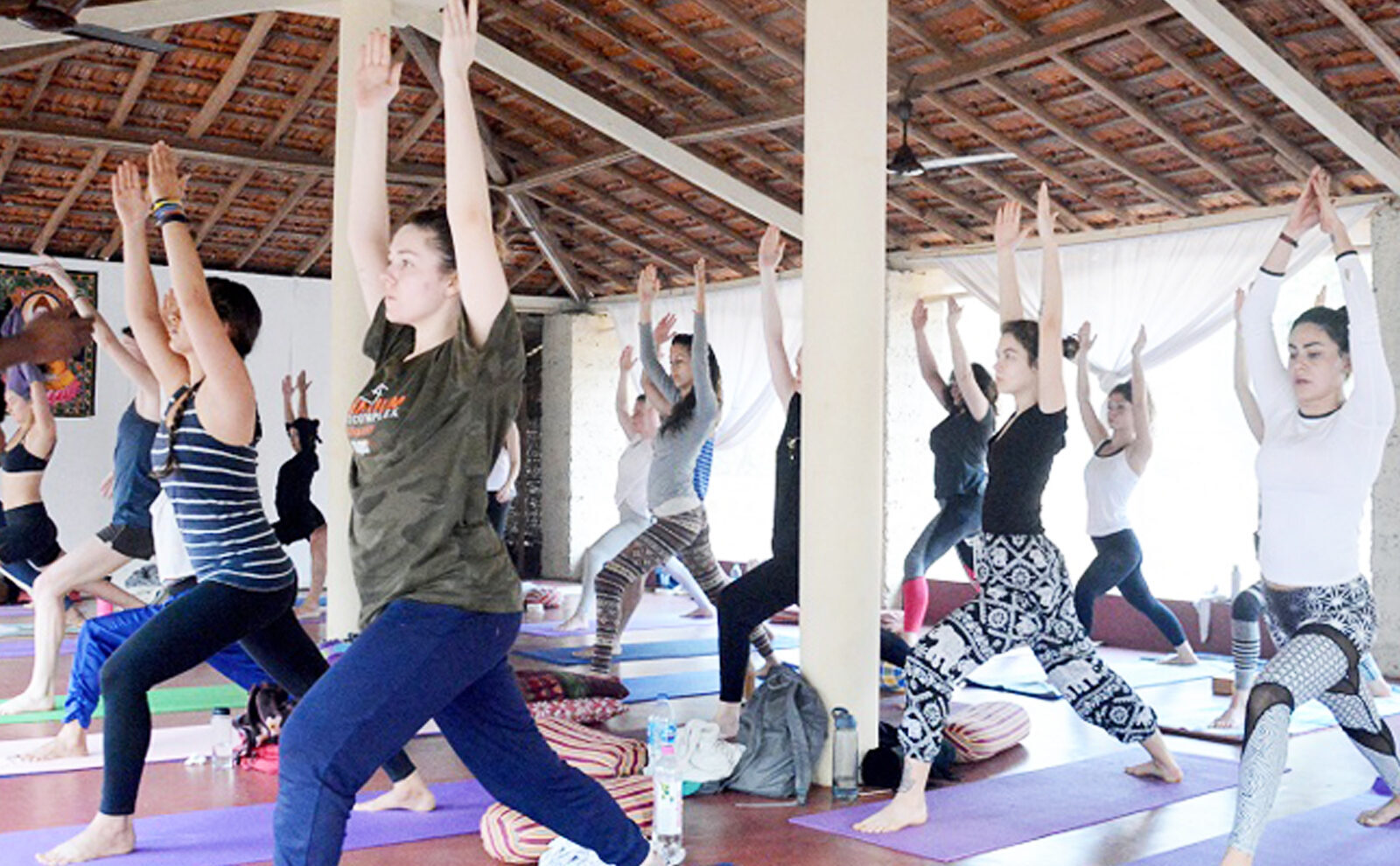
Goa is one of the most popular places in the world to train as a yoga teacher. That is good news, because there is plenty of choice. It also makes choosing harder. Dozens of schools offer courses that look similar online, with the same beach photos and the same promises. How do you tell which one is right for you?
This guide gives you a clear, honest checklist. You will learn what to look for in certification, curriculum and teachers, how to judge the location and reviews, which course length suits you, what should be included in the price, which warning signs to avoid and the exact questions to ask a school before you book.
Key takeaways
- Choose a Yoga Alliance registered school and check the registration yourself.
- Look for a balanced curriculum: practice, philosophy, anatomy, meditation and real teaching practice.
- Experienced lead teachers and small groups matter more than a fancy venue.
- Know exactly what the price includes before you pay a deposit.
- The best season in Goa is October to March; the monsoon runs from June to September.
Why train in Goa?
Goa combines things that rarely come together in one place: a deep connection to Indian yoga tradition, a warm and relaxed beach lifestyle, an international community of practitioners and easy travel connections. You can learn in the country where yoga was born, practise with the sound of the sea in the background and spend your day off swimming, exploring markets or visiting old Portuguese churches.
The north of Goa, especially around Ashwem and Arambol, is quieter than the busy party beaches further south. It is popular with yoga schools because it offers peace for study while still having cafés, beaches and a welcoming community. For more about life in Goa during a course, read our beginner’s guide to yoga teacher training in Goa.
1. Check the certification
Most students want a certificate that is recognised internationally, and for that the standard is Yoga Alliance. A Yoga Alliance registered school (RYS) follows a set curriculum with minimum hours in each subject. When you graduate, you can register as an RYT 200 and use that title when applying to teach at studios, gyms and retreats around the world.
How to check it
- Search for the school by name in the Yoga Alliance directory on their website.
- Check that the specific course is registered (for example, RYS 200), not just the school.
- Be cautious if a school uses the Yoga Alliance logo but cannot give you its registration details.
Certification is not everything, but it is a basic sign that a course meets a recognised standard.
2. Look closely at the curriculum
A good teacher training is much more than a month of yoga classes. You should come away understanding why you practise, how the body works and how to guide other people safely. Ask the school for a detailed syllabus and check that it covers:
Look at the balance. A course that is almost entirely physical practice will make you fitter but not necessarily a better teacher. One that is mostly lectures will leave you unsure on the mat. The best courses mix both, every day.
To understand the full structure, read What Is a 200 Hour Yoga Teacher Training?
See our full 200 hour syllabus200 Hour TTC in Goa · 23 days · Yoga Alliance registered
View course →
3. Research the teachers
The teachers make or break a course. A beautiful venue cannot make up for inexperienced or distant teaching. Find out who will actually lead your training, not just who appears on the website.
- Experience: how many years have they taught, and how many trainings have they led?
- Qualifications: lead trainers should normally be E-RYT 500 or have equivalent long experience.
- Specialisms: who teaches anatomy, philosophy and pranayama? Each subject benefits from a specialist.
- Approach: do they encourage questions and adapt poses to different bodies, or teach one rigid way?
- Availability: are teachers around outside class for questions and support?
At many schools, including ours, the style mix can change slightly from batch to batch. At Ekant Yoga, Hatha and Vinyasa form the core, while Yin or Ashtanga is included depending on the teachers available for each batch. A good school will tell you this honestly when you ask.
4. Ask about group size
Group size has a huge effect on how much you learn. In a small group, teachers know your name, notice your alignment, give feedback on your teaching and adapt to your needs. In a very large group, it is easy to fade into the background. Ask how many students are usually in a batch and what the student-to-teacher ratio is during practicum.
5. Consider the learning environment
A teacher training is intense. You will be up early, practising twice a day, studying and sometimes facing emotional challenges. The environment should help you, not distract you.
- Location: is it quiet enough to study, but close enough to the beach and shops for your free time?
- The shala: is the practice space clean, shaded and well ventilated, with props available?
- Accommodation: is it on site or nearby? Are rooms clean, with good beds and a fan or air conditioning?
- Food: are meals fresh, vegetarian and suitable for practice? Can they handle allergies or dietary needs?
- Atmosphere: does the school feel welcoming and supportive, or like a business processing students?
6. Read reviews the right way
Reviews are useful, but read them with care. Look at independent platforms such as Google, BookYogaRetreats or Tripadvisor as well as the school’s own site.
- Look for detail: reviews that mention specific teachers, subjects or experiences are more trustworthy than short, generic praise.
- Check recent dates: teachers and management change, so recent reviews matter most.
- Read the negatives: how does the school respond to criticism? A calm, helpful reply is a good sign.
- Talk to graduates: if possible, ask the school to put you in touch with a past student.
7. Choose the right course length
If you want to teach, the 200 hour course is the right starting point. If you mainly want to deepen your practice and cannot take a month off, the 100 hour course in Goa is a strong option. Not sure whether the full course is worth it for you? Read Is a 200 Hour Yoga Teacher Training Worth It?
8. Know exactly what is included
Prices in Goa vary a lot, and a cheaper course is not always cheaper once you add up the extras. Before you pay a deposit, ask for a written list of inclusions. Typically you should expect:
- All classes, lectures and teaching practice
- Accommodation for the course (shared or private)
- Daily vegetarian meals
- Course manual and study materials
- Certificate on successful completion
Also check what is not included: airport transfers, excursions, laundry, mats and props, Yoga Alliance registration fees (paid separately to Yoga Alliance) and visa costs. Ask about the deposit, the refund and transfer policy, and what happens if you fall ill during the course.
9. Pick the right time of year
Goa has a clear rhythm of seasons, and the timing of your course affects your experience.
November to February is the most comfortable time for most students. Popular batches can fill early, so it is worth enquiring a few months ahead.
Red flags to watch out for
Ten questions to ask before you book
- Is the course registered with Yoga Alliance, and under what name?
- Who are the lead teachers, and what is their experience?
- Which yoga styles are taught in this batch?
- How many students are in a typical group?
- What does a typical day look like?
- How much real teaching practice will I do?
- What exactly is included in the price, and what costs extra?
- What is the accommodation like, and is it on site?
- What are the deposit, refund and transfer policies?
- Can I speak with a past student?
A good school will be happy to answer all of these clearly. If answers are vague or slow, take that as useful information too.
Think beyond the certificate
A certificate is the practical outcome of a teacher training, but it is rarely what students remember most. Many describe the month as a turning point: they leave with more strength and flexibility, yes, but also more self-awareness, healthier habits, new friendships and the confidence to speak in front of a group.
So as well as checking the boxes above, ask yourself how you feel when you talk to a school. Do they listen? Do they answer your questions with care? Does the place feel like somewhere you could grow? That instinct matters. To know what the month is really like, read what to expect during a 200 hour yoga teacher training.
Why students choose Ekant Yoga in Goa
Yoga Alliance registered
Internationally recognised 50, 100, 200 and 300 hour courses.
Traditional and practical
Hatha and Vinyasa at the core, with philosophy, anatomy and meditation woven in.
Real teaching practice
Step-by-step practicum with feedback, so you leave ready to teach.
A peaceful setting
Quiet North Goa, close to the beach, with a calm space for study.
Residential course
Accommodation and vegetarian meals, so you can focus fully on learning.
International community
Students from around the world who support each other through the course.
Compare destinations too: if you are considering Sri Lanka as well, read Sri Lanka vs India for yoga teacher training, or see our 200 hour course in Sri Lanka.
Final thoughts
Choosing a yoga teacher training in Goa does not have to be overwhelming. Check the certification, read the syllabus, find out who will teach you, understand what is included and pick a season that suits you. Then trust the school that answers your questions honestly and makes you feel welcome.
If you would like to know more about training with us, contact us and enquire for dates. We are happy to answer every question on the list above.
Frequently asked questions
Is a yoga teacher training in Goa suitable for beginners?
Yes. Many students start with only a little experience. A regular practice of a few months beforehand will help, but flexibility is not required.
How long is a 200 hour course in Goa?
Our 200 hour course runs over 23 days. Most residential courses last three to four weeks.
Do I need teaching experience?
No. Teaching methodology and practice are part of the course.
Is Yoga Alliance certification important?
It is the most widely recognised standard and helps when applying to teach internationally.
What is the best time to do a course in Goa?
October to March, with November to February the most comfortable months.
What should I check before paying a deposit?
The certification, the lead teachers, what is included, the accommodation and the refund and transfer policy.
Can I choose between Goa and Sri Lanka?
Yes. We run courses in both. Goa is easier to reach and has a lively yoga community; Sri Lanka is quieter and greener.