Yoga Philosophy
The Eight Limbs of Yoga Explained Simply
Yama, niyama, asana, pranayama, pratyahara, dharana, dhyana and samadhi: a simple, practical guide to the eight limbs of yoga from Patanjali’s Yoga Sutras, with everyday examples you can use on and off the mat.
Most people meet yoga through the poses. But the poses are only one part of a much bigger picture. Around two thousand years ago, the sage Patanjali described yoga as a path with eight parts, or limbs, that work together to steady the mind and bring lasting peace.
This guide explains each of the eight limbs of yoga in plain language, shows how they connect, and gives you simple ways to practise every limb in daily life, whether you are a complete beginner or preparing for yoga teacher training.
Key takeaways
- The eight limbs come from Patanjali’s Yoga Sutras, one of yoga’s most important texts.
- They are yama, niyama, asana, pranayama, pratyahara, dharana, dhyana and samadhi.
- The first two limbs are ethical guidelines; the middle limbs work with body and breath; the last limbs are stages of meditation.
- The limbs are not strict steps. You can practise several at the same time.
- Every limb can be practised in ordinary daily life, not only on a yoga mat.
What are the eight limbs of yoga?
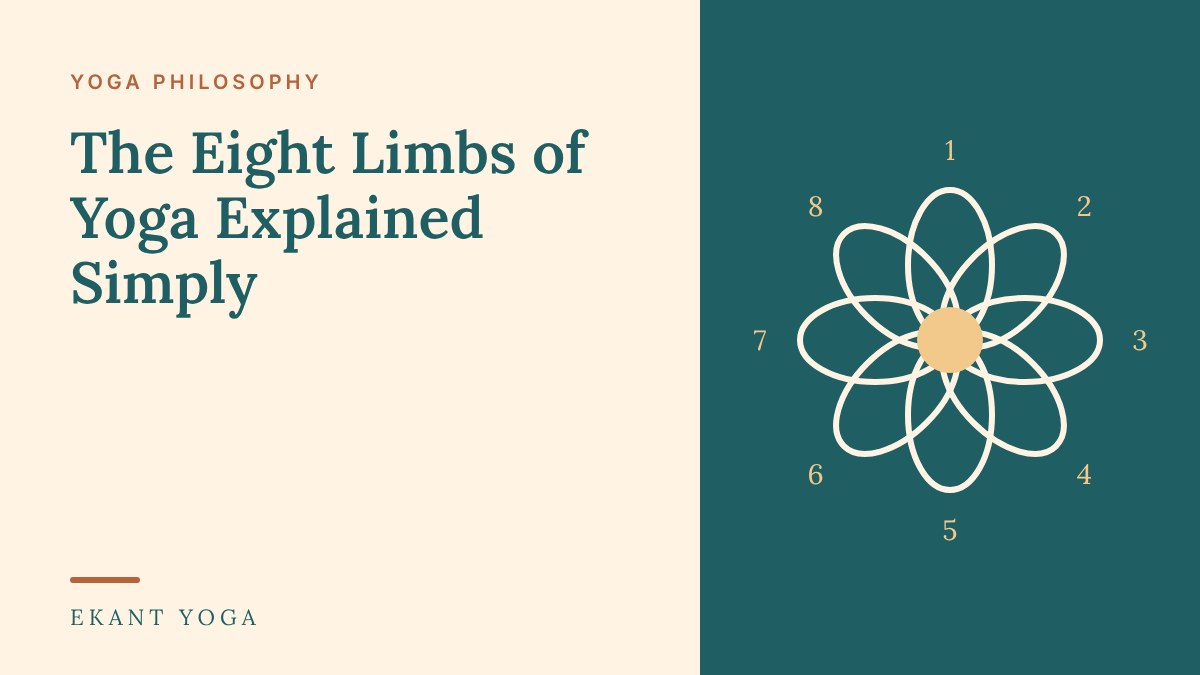
The eight limbs of yoga, called ashtanga in Sanskrit (ashta means eight, anga means limb), are described in the Yoga Sutras of Patanjali. Scholars date the text to roughly the first centuries of the common era, although the exact date is debated. In sutra 2.29, Patanjali lists the eight limbs as a complete method for reaching a calm, clear and free mind.
Think of them as eight branches of one tree rather than eight separate subjects. Each limb supports the others: kind behaviour makes the mind quieter, a steady body makes breathing easier, and a calm breath makes meditation possible.
1. Yama: how we treat others
The yamas are five ethical guidelines for living peacefully with the world around us. They are not commandments but invitations to notice how our actions affect others.
Ahimsa
Non-harming in thought, word and action, including kindness towards yourself.
Satya
Truthfulness, spoken with care and good timing.
Asteya
Not stealing, including other people’s time, energy or credit.
Brahmacharya
Wise use of energy and moderation in all things.
Aparigraha
Non-possessiveness: letting go of greed, envy and clinging.
Try it today: choose one yama, such as satya, and notice each time you exaggerate, avoid the truth or speak without kindness.
2. Niyama: how we treat ourselves
The niyamas are five personal practices that build a healthy, disciplined and contented inner life.
Saucha
Cleanliness of body, surroundings and mind.
Santosha
Contentment: appreciating what you already have.
Tapas
Discipline and steady effort, especially when it is not easy.
Svadhyaya
Self-study and the study of wisdom texts.
Ishvara pranidhana
Surrender to something greater than yourself, and letting go of control over results.
Try it today: end the day by writing down three things you are grateful for. That small habit is santosha in action.
3. Asana: steady and comfortable posture
Patanjali’s description of asana is beautifully short: sthira sukham asanam, posture should be steady and comfortable (sutra 2.46). In its original sense, asana meant a stable seat for meditation. Over centuries, especially through Hatha yoga, it grew to include the many poses practised today.
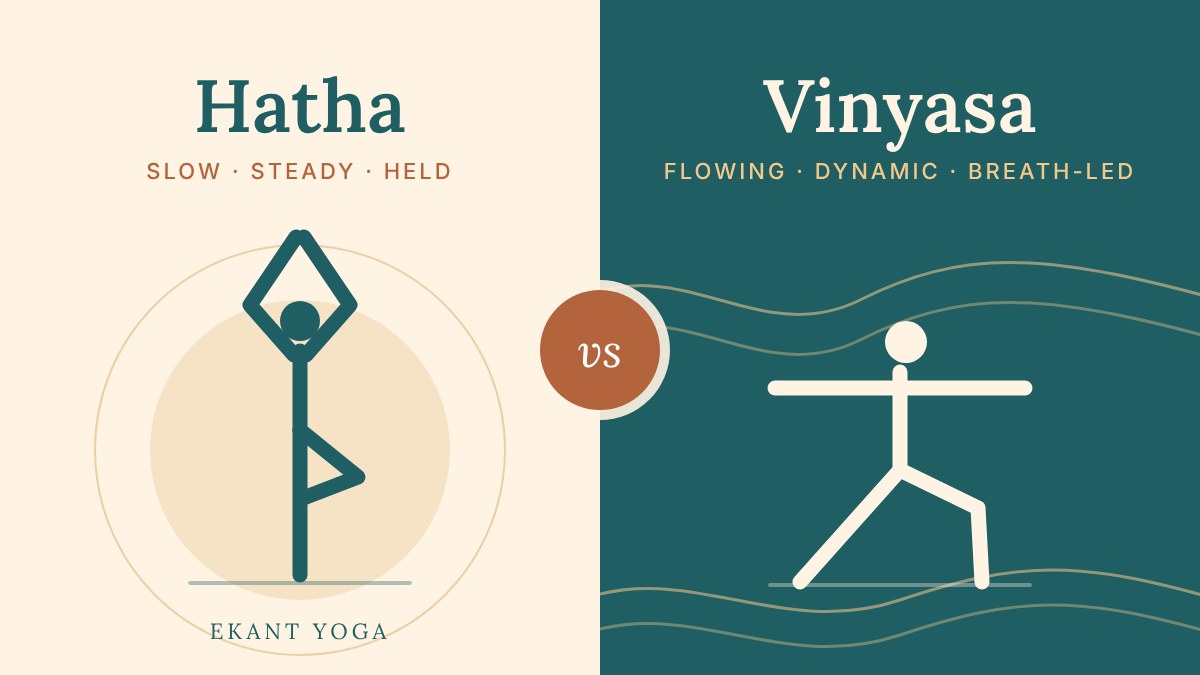
Asana keeps the body strong, flexible and healthy so you can sit, breathe and focus without distraction. Practised with awareness, it also teaches patience, balance and honesty about your limits. Learn more in Hatha vs Vinyasa yoga.
4. Pranayama: working with the breath
Prana means life force and ayama means extension or control. Pranayama is the practice of regulating the breath: lengthening, pausing and directing it. Because breath and mind are closely linked, a slow, steady breath helps create a calm, steady mind.
Simple techniques such as alternate nostril breathing (nadi shodhana) or deep belly breathing are a gentle place to start. Always learn more advanced practices, including breath retention, from an experienced teacher.
5. Pratyahara: drawing the senses inward
Pratyahara is the bridge between the outer and inner limbs. It means withdrawing attention from the constant pull of sights, sounds and notifications, and turning it inward. It is not about shutting the world out, but about not being controlled by it.
Try it today: close your eyes for two minutes and listen to the sounds around you without naming or judging them. Then slowly bring your attention to your breath.
6–8. Dharana, dhyana and samadhi: the inner limbs
The final three limbs describe a deepening journey into meditation. Patanjali calls them together samyama.
Dharana: concentration
Holding attention on one point, such as the breath, a candle flame or a mantra. The mind wanders; you gently bring it back.
Dhyana: meditation
When concentration becomes effortless and continuous, like oil flowing smoothly from one vessel to another.
Samadhi: absorption
A state of complete absorption and inner peace, where the sense of a separate, busy ‘me’ falls quiet.
Samadhi is often described as the goal of yoga, but the path itself is valuable. Even a few minutes of dharana each day can make you calmer, clearer and kinder.
How the eight limbs work together
The limbs are sometimes presented as a ladder you must climb one rung at a time. In reality, most students practise several limbs at once. A single yoga class can include ahimsa (not forcing a pose), tapas (steady effort), asana, pranayama, pratyahara and a short meditation.
- Outer limbs (1–2): create a peaceful life and a clear conscience.
- Middle limbs (3–5): prepare the body, breath and senses.
- Inner limbs (6–8): train and settle the mind.
The eight limbs in yoga teacher training
In a good yoga teacher training, the eight limbs are not just a lecture topic. They shape the whole day: early meditation, pranayama, asana practice, philosophy study and the shared values of a residential community. Many graduates say this is what changes them most.
At Ekant Yoga, our Yoga Alliance registered courses in Galle, Sri Lanka and Goa, India include daily asana, pranayama and meditation, alongside yoga philosophy, anatomy and teaching methodology. Explore the 200 hour yoga teacher training in Sri Lanka or the 200 hour yoga teacher training in Goa, or start with a shorter course such as the 100 hour course in Sri Lanka or the 50 hour course in Sri Lanka.
Final thoughts
The eight limbs of yoga offer a complete map for a healthier body, a calmer mind and a kinder way of living. You do not need to master them all at once. Start with one: be a little more truthful, breathe a little more slowly, or sit quietly for five minutes. Over time, the limbs begin to support each other, and yoga becomes far more than exercise.
Questions about studying yoga philosophy in depth? Contact us and we will be happy to help.
Frequently asked questions
What are the eight limbs of yoga?
Yama, niyama, asana, pranayama, pratyahara, dharana, dhyana and samadhi, as described by Patanjali in the Yoga Sutras.
Who wrote about the eight limbs of yoga?
The sage Patanjali, in the Yoga Sutras. The eight limbs are listed in sutra 2.29.
Do I have to practise the limbs in order?
No. They are often described in order, but most people practise several limbs at the same time.
Is asana the most important limb?
No. Asana is one of eight limbs. Its traditional purpose is to prepare the body for breathwork and meditation.
Is the eight limbs of yoga a religion?
No. The eight limbs are a philosophy and practical method. People of any faith, or none, can practise them.