Home › Blog › Health & Wellbeing
Health & Wellbeing
How Yoga Calms and Rewires the Nervous System
A clear guide to the nervous system, how modern life keeps it stuck in stress mode, and how asana, pranayama, yoga nidra, meditation and a yogic lifestyle help it rebalance, with a daily practice you can start today.

Do you ever feel “wired but tired”? Exhausted, yet unable to switch off at night; on edge for no clear reason; easily startled, irritated or overwhelmed? These are often signs of a nervous system that has spent too long in stress mode and has forgotten how to rest.
The encouraging news is that the nervous system is adaptable. With regular practice, it can learn new patterns, a process often described as rewiring. In this guide we explain how the nervous system works, how modern life throws it off balance, and how the practices we teach at Ekant Yoga help bring it back into harmony.
Key takeaways
- The autonomic nervous system switches between “fight or flight” and “rest and digest”.
- Constant stress, screens, shallow breathing and sitting keep many of us stuck in alert mode.
- Slow breathing, mindful movement, deep relaxation and meditation encourage the rest response.
- Regular practice can help the body learn to recover from stress more quickly.
- Yoga supports, but does not replace, medical or psychological care.
Understanding the nervous system
The nervous system is the body’s communication network. It carries messages between the brain and every organ, muscle and cell, controlling everything from movement to digestion to mood.
Two modes: alert and rest
The autonomic nervous system has two main branches that work like an accelerator and a brake:
Sympathetic: “fight or flight”
Raises heart rate and blood pressure, quickens breathing, tenses muscles and sharpens alertness. Essential in an emergency.
Parasympathetic: “rest and digest”
Slows the heart, deepens breathing, supports digestion, repair and sleep. Essential for recovery.
A healthy nervous system moves easily between the two: alert when needed, relaxed when the challenge has passed. Problems arise when we get stuck on the accelerator.
How modern life keeps us stuck in stress mode
1. Constant stress
Deadlines, money worries and endless to-do lists keep the stress response switched on, day after day, without real recovery.
2. Screens and constant input
Notifications, news and social media keep the brain alert and stimulated. Bright screens late at night can also interfere with the body’s natural sleep signals.
3. Shallow breathing
Under stress, and when hunched over a desk, many people breathe quickly into the upper chest. This style of breathing is linked with the alert state and can feed a cycle of tension.
4. Long hours of sitting
Poor posture and little movement create tension in the neck, shoulders and back, and reduce the natural “reset” that physical activity provides.
5. Bottled-up emotions
When we push feelings aside rather than processing them, the body often holds the tension, leaving us restless or exhausted.
Signs your nervous system needs support
- Trouble falling or staying asleep
- Feeling anxious, irritable or easily overwhelmed
- Tight jaw, shoulders or stomach
- Digestive problems linked to stress
- Difficulty concentrating or relaxing
- Feeling tired all the time, yet restless
How yoga helps the nervous system rebalance
Yoga gives the nervous system what it is missing: regular, repeated signals of safety. Over time, the body becomes better at shifting into rest mode and recovering from stress. Research on yoga and breathing practices has found links with lower perceived stress, better mood and improved sleep. Here are the five tools we use.
1. Asana: mindful movement
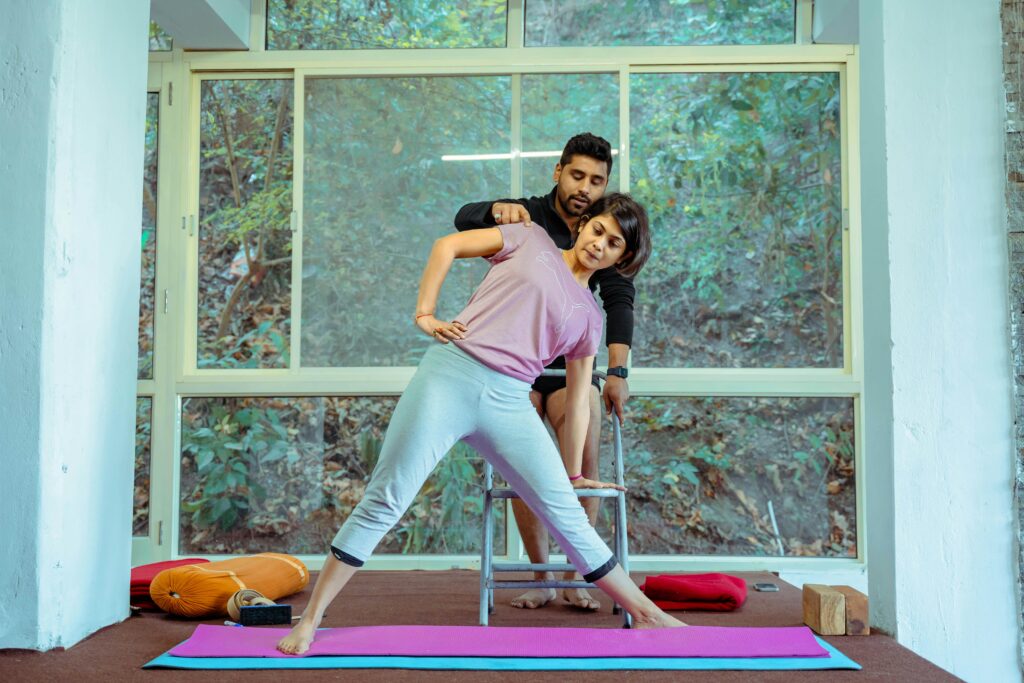
Moving slowly with awareness releases physical tension and burns off some of the energy the stress response creates. Gentle backbends open a hunched chest, forward bends tend to feel calming, and twists release the spine. Holding poses with steady breathing also trains you to stay calm under mild physical challenge, a skill that carries over into daily life.
2. Pranayama: the breath as a remote control
Breathing is unique: it runs automatically, but we can also control it. Slowing the breath, and especially lengthening the exhale, is one of the most direct ways to encourage the rest response.
- Extended exhale breathing: breathe in for 4, out for 6 to 8.
- Nadi Shodhana: alternate nostril breathing for balance and calm.
- Ujjayi: a soft, ocean-like breath that slows and steadies breathing.
- Bhramari: humming bee breath, very soothing for a busy mind.
3. Yoga nidra: deep guided relaxation
Yoga nidra, sometimes called “yogic sleep”, is a guided practice done lying down. You are led through a body scan, breath awareness and visualisation into a state of deep relaxation while staying aware. Many people find it one of the most restorative practices of all, and it is especially helpful for those who struggle to sleep.
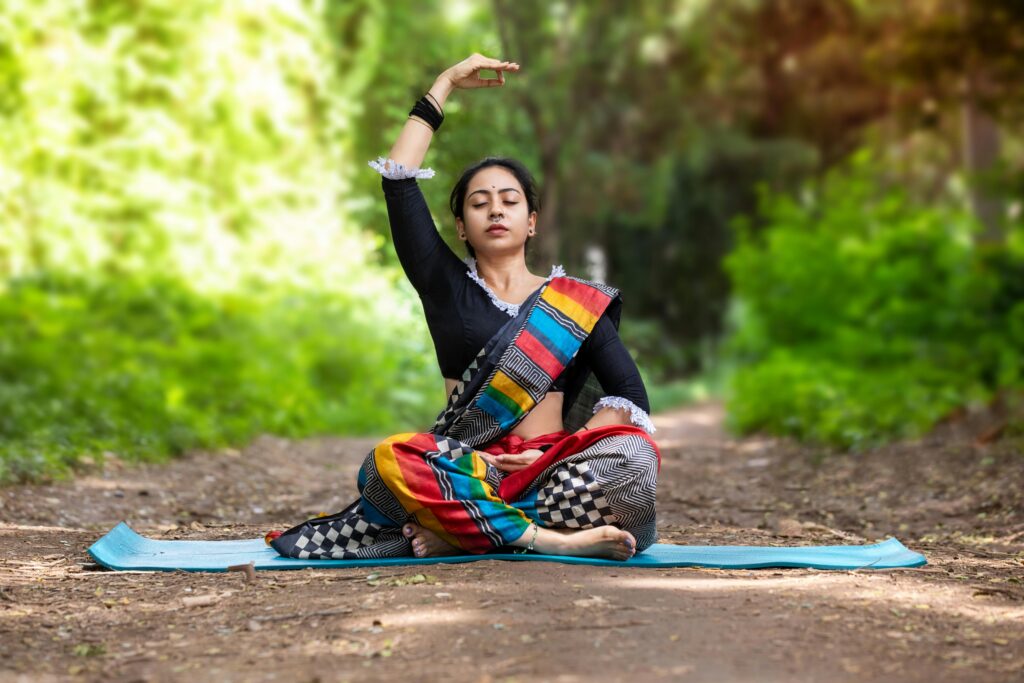
4. Meditation: training attention
Meditation teaches you to observe thoughts and feelings without being swept away by them. Over time, this builds a pause between a trigger and your reaction. Instead of snapping or spiralling, you notice, breathe and choose your response.
5. A yogic lifestyle
Regular sleep and meal times, fresh food, time in nature, less screen time and kind relationships all send signals of safety to the nervous system. These everyday habits support everything you do on the mat. For practical steps, read how to build a stress-free lifestyle with yoga.
A 20-minute daily practice to calm the nervous system
Practise in the evening if sleep is your main concern, or in the morning to start the day calmly. For a deeper look at turning attention inward, read why pratyahara is the gateway to meditation.
Benefits many students notice
Calmer reactions
More space between a trigger and your response.
Better sleep
Falling asleep more easily and waking more refreshed.
Sharper focus
Less mental noise and better concentration.
Less tension
Softer shoulders, jaw and stomach.
Emotional balance
Feeling more steady and less overwhelmed.
Faster recovery
Bouncing back from stressful days more quickly.
How long does it take?
Many people feel calmer after a single session of slow breathing or relaxation. Deeper changes, such as better sleep and calmer reactions, usually build over weeks of regular practice. Like strengthening a muscle, the nervous system learns through repetition. Ten to twenty minutes a day is far more effective than one long session a week.
The breath and the vagus nerve
One reason breathing is so powerful is its connection with the vagus nerve, a long nerve that runs from the brainstem to the heart, lungs and digestive system. It is a major part of the parasympathetic, or “rest and digest”, branch of the nervous system.
When you breathe out slowly, heart rate naturally slows a little. This is one reason slow breathing with a longer exhale feels calming. Humming, chanting and gentle singing also involve long, controlled exhales, which may explain why practices such as Bhramari and chanting “Om” feel so soothing. You do not need to understand the science to benefit; simply notice how you feel after five minutes of slow breathing.
Signs your practice is working
- You notice tension earlier, before it builds into a headache or an argument.
- You fall asleep more easily, or get back to sleep after waking.
- Your breath stays slower and lower in stressful moments.
- You recover from a difficult day more quickly.
- Small irritations bother you less.
- You feel more present with the people around you.
Common mistakes to avoid
- Only doing intense workouts: fast, demanding classes have their place, but a stressed nervous system also needs slow, restorative practice.
- Forcing the breath: breathing should be slow and comfortable, never strained. If you feel dizzy, return to normal breathing.
- Practising only when stressed: regular practice on calm days is what builds resilience for difficult ones.
- Skipping relaxation: Shavasana and yoga nidra are where much of the nervous system benefit happens.
- Scrolling straight after practice: give yourself a few quiet minutes before picking up your phone.
The Ekant Yoga approach
Ekant means solitude, the quiet space in which we can rest and turn inward. Our courses are built around that idea. Daily practice combines Hatha and Vinyasa asana (with Yin or Ashtanga depending on the teachers available for each batch), pranayama, meditation, relaxation and yoga philosophy, in peaceful settings in Goa and Sri Lanka.
Living this rhythm every day for a few weeks, away from everyday pressures, gives the nervous system a rare chance to reset. Many students tell us they sleep better and feel calmer than they have in years. Learn more about our philosophy in why Ekant Yoga is a journey inward, or explore our Yoga Alliance certified courses in Goa and Sri Lanka. For a shorter introduction, try the 11-day 100 hour course.
Final thoughts
Your nervous system is not broken; it is doing exactly what it was designed to do in a world that rarely lets it rest. By breathing slowly, moving mindfully, relaxing deeply and meditating regularly, you can teach it that it is safe to slow down. Start with a few minutes today. Your body will remember.
Frequently asked questions
Can yoga really change the nervous system?
Regular yoga, breathing and meditation can help the body shift into the rest response more easily. Studies link these practices with reduced stress and better sleep.
Which breathing exercise calms the nervous system fastest?
Slow breathing with a longer exhale than inhale, such as 4 in and 6 out, is simple and effective for most people.
What is yoga nidra?
A guided relaxation practice done lying down that leads you into deep rest while staying aware.
How often should I practise?
Daily, even for 10–20 minutes, works better than occasional long sessions.
Can yoga replace therapy or medication?
No. It can complement professional treatment, but do not stop medication or therapy without advice.
Is yoga good for anxiety?
Many people find yoga helpful for managing anxiety, especially breathing and relaxation practices. Seek professional help if anxiety is severe.